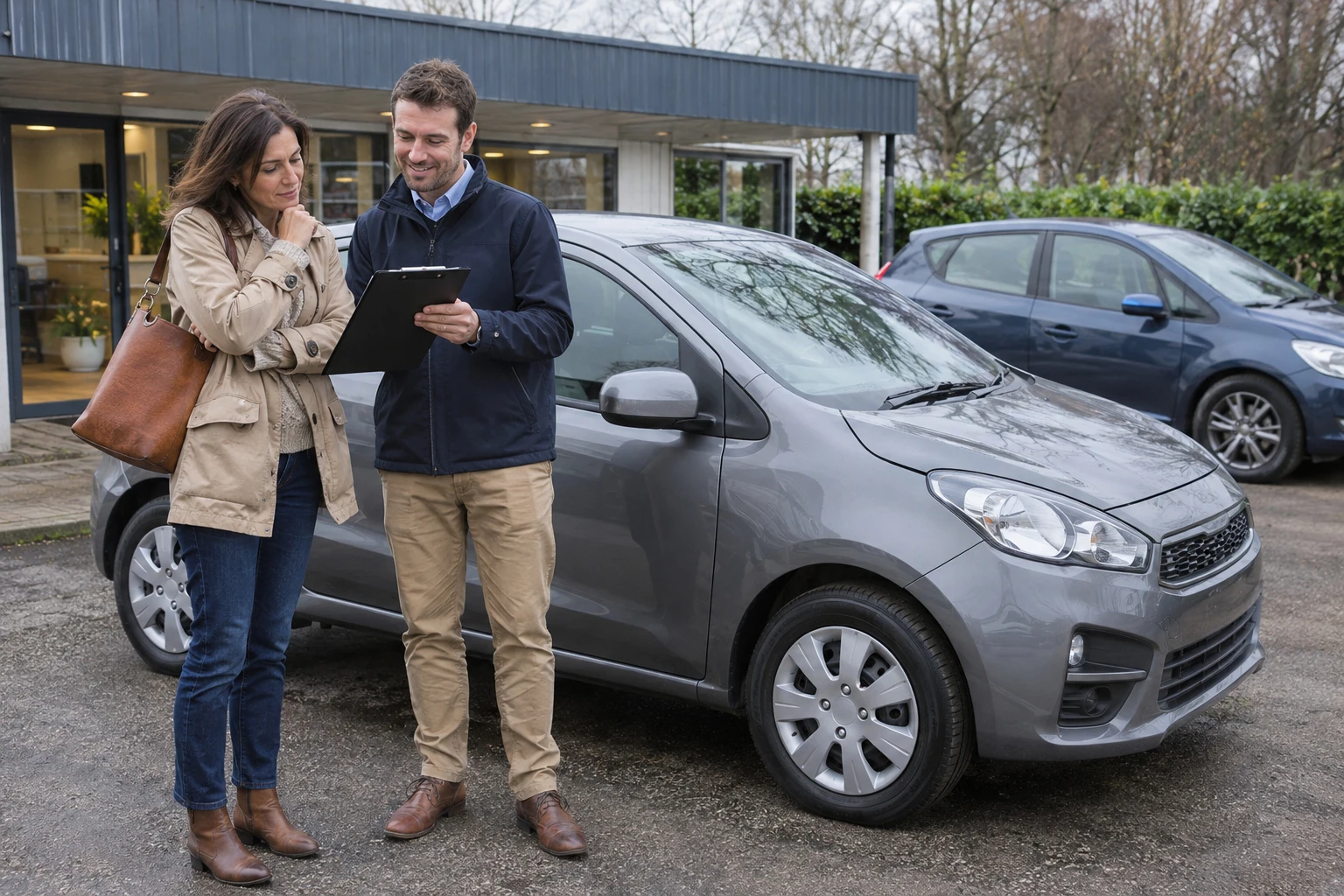
How vehicle borrowing works
Car financing is a loan used to buy a vehicle, with the vehicle itself serving as security, so that the lender can repossess it if payments stop. A related product, borrowing against a car you already own, uses the same security for a different purpose, usually cash.
Because the vehicle backs the loan, lenders are somewhat more willing to work with imperfect files than they are for unsecured borrowing. They are not blind to risk, though. A car loses value every year, and the lender wants the balance to stay below what the car could be sold for. This single concern, called negative equity, drives many of the checks, the limits on amount and the pricing.
Three common situations
- Buying from a dealer. The dealer submits your application to one or more lenders.
- Buying from a private seller. You arrange the loan yourself, and the lender may inspect the vehicle details.
- Borrowing on a car you own. You get cash against its value, as with the auto equity loans Cash Money lists among its products.
Credit checks at each stage
Few vehicle lenders skip the credit review. The checks can occur in several places, and it helps to know where.
| Stage | What may be requested | Effect on your file |
|---|---|---|
| Online preapproval | A preliminary look, sometimes described as soft | Depends on the lender; ask first |
| Dealer application | A full inquiry from one or several lenders | May appear as lender requests |
| Final approval | Income, identity and vehicle details | Confirms the earlier estimate |
| Refinancing | A new application and inquiry | New entry on your report |
The Financial Consumer Agency of Canada notes that lender inquiries over the last three years can appear on your report and remain for three years at Equifax and six years at TransUnion. A dealer who sends your application to many lenders at once can therefore leave several entries. Ask the dealer in advance which lenders will be contacted, and whether you can limit the number.
Fairstone states that looking at your options does not affect your credit, and Cash Money separates a preapproval questionnaire from its formal acceptance. Check that your chosen lender works the same way.
What the loan costs
A vehicle loan combines the purchase price, the interest rate and the term. A long term lowers the payment but increases the interest and keeps you in debt while the car ages.
Illustration
Suppose you finance $12,000 at an annual rate of 18 percent over 60 months. The payment is about $305 and the total interest about $6,300. Stretch the term to 84 months and the payment falls to about $252, but the interest rises to roughly $9,200. A shorter term, if you can afford it, costs less overall. These are calculations for illustration; actual rates depend on the lender, the file and the vehicle.
Beyond the loan, remember the other costs of owning a car: insurance, fuel, maintenance and registration. A lender will consider your payment, but only you can decide whether the whole bundle fits your budget.
Limits on lending
Ordinary installment lending is subject to the criminal interest rate, which is 35 percent annual percentage rate since January 1, 2025. Some secured products, such as pawn loans, fall under exceptions, which is a reason to read the contract carefully and to ask how the lender classifies the product.
Borrowing against a car you own
Auto equity or title-style loans advance cash against a vehicle you already own. Cash Money lists auto equity loans in its range, and other lenders use different names. The approach looks like car financing in reverse: instead of buying the car, you pledge it.
- The lender will want proof of ownership, registration and insurance.
- The amount is based on the vehicle's value, not only your income.
- The lender may register a claim on the vehicle or hold part of the ownership documents.
- If you fall behind, the car may be repossessed, and you could lose your transportation to work.
Rules for this kind of loan vary by province and could not be fully verified across the country, so check what your provincial consumer protection office says about the lender you are considering. Never hand over your car keys or ownership papers to someone who contacts you first or who asks for money before releasing funds.
The risk is practical: losing a car can cost you a job, which in turn makes repayment harder. Treat this product as a last resort, and compare it with a smaller unsecured loan or a payment plan before you choose it.
Refinancing a vehicle loan
Refinancing means replacing your current car loan with a new one, ideally on better terms. It can help in several situations.
Good reasons to refinance
- Your score has improved since you took the first loan and lower rates are now possible.
- The original dealer rate was high and you can find a cheaper lender.
- You need a lower payment to avoid default, and you accept a longer term.
Warning signs
- You owe more than the car is worth, which most lenders will not finance.
- The new loan adds fees that cancel the savings.
- The new term is so long that you pay more in total even at a lower rate.
To judge a refinancing offer, compare the remaining balance and remaining interest on the existing loan with the total cost of the new one. Ask the current lender whether early repayment carries a fee, since that charge is part of the cost of switching. A refinancing application is a new application, so expect a credit inquiry and check whether it is soft or hard before you accept.
Preparing for a vehicle loan application
A few steps improve the chances of a reasonable offer.
- Obtain your own report from Equifax or TransUnion; looking at it does not affect your score.
- Set a budget that covers the payment and the running costs.
- Decide on a down payment, since a larger one reduces the amount borrowed and the risk for the lender.
- Gather documents: identification, proof of income, proof of address and insurance details.
- Get at least two written quotes and compare the annual percentage rate and the total cost.
Be careful with add-ons such as extended warranties, insurance on the loan or service packages that dealers may fold into the financing. Each increases the amount borrowed and the interest on it. Ask for the price with and without them, and refuse any that you do not understand.
If payments become difficult
If you fall behind, contact the lender early. Many prefer a revised schedule to the cost of repossession. Asking promptly for a deferral or a longer term can preserve your credit and your car. A non-profit credit counsellor can review the whole budget, and agencies accredited through Credit Counselling Canada offer repayment plans for unsecured debts, which may free up money for the car loan.
Avoid borrowing from a payday lender to make a vehicle payment, because a fee of up to $14 per $100 on a short loan costs far more than the late fee on the car loan. When trouble persists, selling the vehicle voluntarily may leave you better off than a forced sale, since you control the timing and the price.