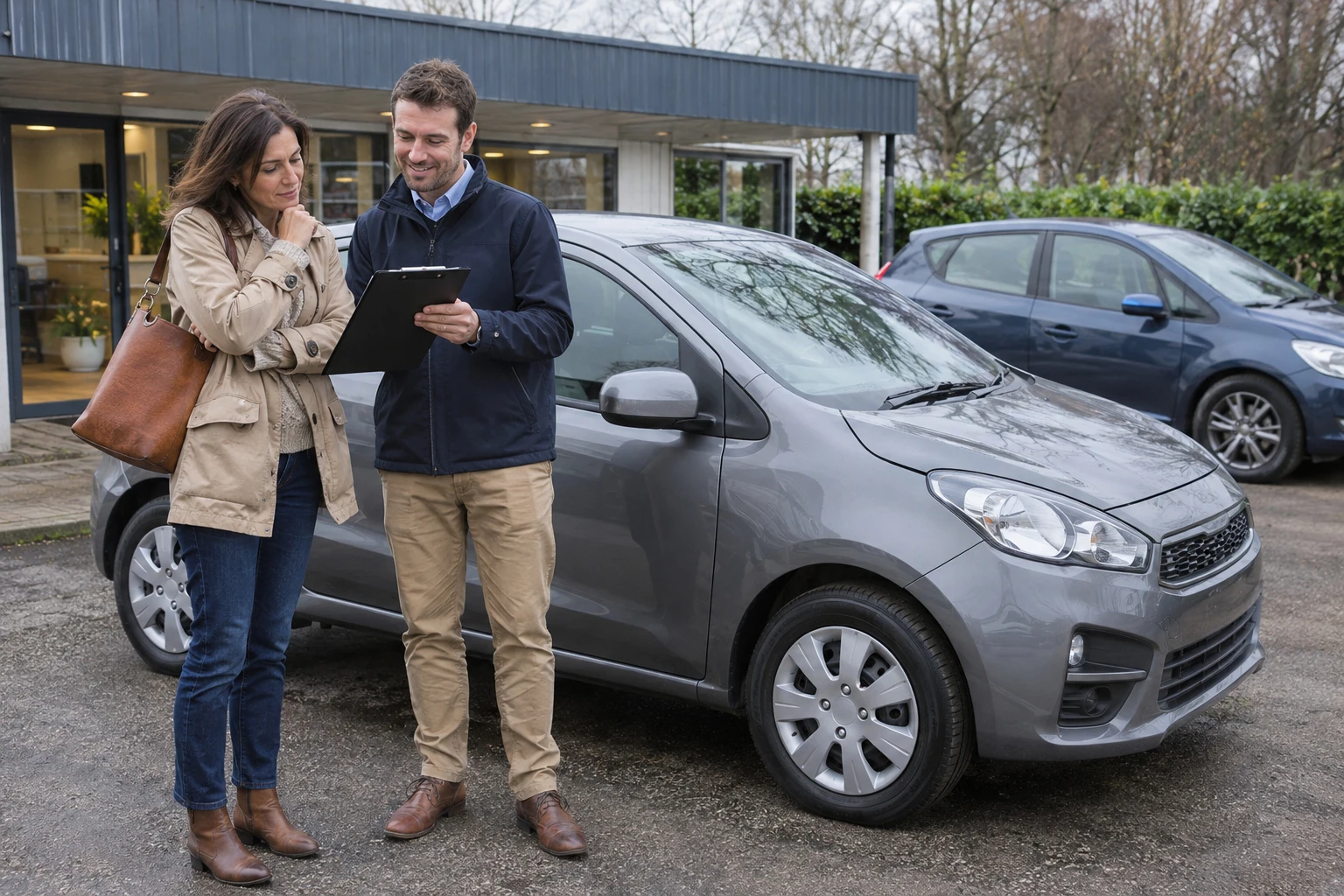
The idea behind vehicle title lending
Vehicle title lenders without credit checks advance money against the value of a car, truck or motorcycle you already own, and they concentrate on the vehicle and your ability to pay instead of on a credit bureau report. The lender takes a legal claim on the vehicle, and if the loan goes unpaid, it may seize and sell the vehicle to recover what is owed. You usually keep driving the vehicle during the loan.
That arrangement can open a door for borrowers with damaged files, but it also puts at stake the thing many people need to reach work. Understanding how the claim is registered and what the contract allows is essential before you sign anything.
Terminology you will meet
- Title loan and vehicle equity loan are often used for the same product.
- Lien means the lender’s registered claim on the vehicle.
- Equity is the vehicle’s value minus anything still owed on it.
- Repossession is the lender taking the vehicle after default.
What the vehicle must satisfy
Lenders set conditions on the collateral. The details vary by company, so ask for them before you spend time on an application.
| Condition | Why a lender asks |
|---|---|
| Ownership in your name | Only the owner can grant a claim on the vehicle |
| Little or no existing loan | A prior lender’s claim may rank ahead of the new one |
| Age and condition | Older or damaged vehicles resell for less |
| Valid registration and insurance | Protects the lender’s security |
| Inspection or photos | Confirms the vehicle matches the paperwork |
You will probably need the ownership document, proof of insurance, identification and a valid driver’s licence. Lenders also ask about income, because they prefer to be repaid from earnings and not from selling the vehicle.
Is it really a loan with no check at all?
Even where a company does not pull a bureau report, it verifies the vehicle, your identity and often your income. Cash Money, which offers vehicle equity loans in branches alongside other products, says its payday loans consider repayment ability. Other lenders vary: some run a soft inquiry, some a full one, and some none.
The Financial Consumer Agency of Canada’s page on vehicle-secured loans was not accessible when these details were checked in November 2026, so no federal rule for this product is quoted here. Look at the loan agreement for the annual percentage rate and the total cost of borrowing before agreeing.
Which ceiling applies
The 35 per cent criminal interest rate took effect on January 1, 2025. Bennett Jones lists pawn loans, payday loans and commercial loans among those excluded, but does not mention vehicle title lending in that list. Ask the lender to state the rate in writing and to say whether any exemption is being relied upon.
Costs with worked examples
A title loan is secured, so you might expect a lower price than an unsecured product, though that depends on the lender. Illustrations help show how repayment can vary with the term.
| Loan | Rate | Term | Monthly payment | Total interest |
|---|---|---|---|---|
| $1,500 | 34.99% | 12 months | About $150 | About $299 |
| $4,000 | 29.99% | 24 months | About $224 | About $1,367 |
These are arithmetic examples, not offers. Lender-specific fees for administration, registration or early payout can raise the true cost, so ask for a list of charges.
Questions about fees
- Is there a fee to register or discharge the lender’s claim?
- Is there a penalty for repaying early?
- What charge applies to a missed payment?
How the lender’s claim works
When a lender takes security over a vehicle, it usually records the claim in a provincial registry so that other lenders can see it. That registration is part of the legal protection and, once the loan is repaid, the lender should release it. Ask how and when the release happens, and keep proof that it was done.
Some lenders also hold the ownership document or require a spare key, or fit a tracking or starter-interrupt device. These conditions should appear in the contract. If a device will be installed, ask who owns it and how it is removed.
If you still owe money on the vehicle
An existing loan complicates matters, because the earlier lender’s claim may come first. Do not hide it. A new lender who discovers an undisclosed loan may refuse or cancel the arrangement.
Default, repossession and your rights
If you fall behind, the lender may demand payment, add charges and eventually repossess. Rules on notice, sale and any surplus differ by province, so read the contract and consult your provincial consumer office. Contact the lender as soon as trouble appears; many will agree to adjust the schedule rather than start a seizure.
- Keep every payment receipt.
- Do not hand the vehicle to anyone claiming to represent the lender without written proof.
- Keep insurance active, as a lapse can breach the contract.
- Ask for a written statement of the balance before agreeing to any settlement.
Losing a vehicle can mean losing a job, so weigh it as seriously as the interest rate. If the repayment would leave you short for fuel, insurance and repairs, the loan is likely too large.
Comparing title loans with other options
A vehicle-secured loan is one of several ways to borrow when your report is weak. Each has a different risk profile, and the cheapest is often the one that puts the least at stake.
| Option | What you risk | Typical drawback |
|---|---|---|
| Vehicle title loan | Your vehicle | Loss of transportation on default |
| Payday advance | Next paycheque | Very high annual cost |
| Pawn loan | The pledged item | Low valuation of goods |
| Credit union small loan | Membership terms apply | May require a deposit history |
Because the vehicle is likely worth far more than the loan, forfeiting it can cost many times the debt. A pawn loan against a small item caps the loss at that item. That asymmetry is the strongest argument for exhausting other choices first.
A checklist before signing
Take the contract home if you can, and read it without the lender in the room. Confirm each item below.
- The lender’s full legal name, address and any licence number.
- The amount you actually receive after fees are deducted.
- The annual percentage rate and the total cost of borrowing in dollars.
- The number, amount and dates of payments.
- What counts as default and how much notice you receive.
- Whether any device will be placed on the vehicle.
- How and when the lender’s claim on the vehicle is released.
If a salesperson is unwilling to let you review the contract, that alone is a reason to leave. A sound agreement stands up to a night of reading.
Safer routes to consider first
Before offering a vehicle as security, check whether a credit union or caisse populaire can offer a modest loan or a hardship arrangement. Ask any current creditors about a revised payment schedule. A non-profit credit counsellor can examine the bigger picture, and Credit Counselling Canada keeps a locator of accredited member agencies.
If you do proceed, borrow the smallest amount you need, choose the shortest term you can afford and photograph the vehicle and every page of the contract. Do not pay anyone an upfront fee for a promise of approval, and keep a copy of every document you receive.